Our Process

Processes
Leveraging model-based construction and LEAN processes to deliver precision-engineered residential, commercial, and institutional projects on time and within budget.
Contact UsModel-based coordination ensures seismic bracing is fully integrated into the system layout from the outset, rather than treated as an afterthought in the field. Bracing locations, orientations, and attachment points are developed within the model, allowing for proper coordination with structure, services, and access requirements before installation begins.
This enables accurate prefabrication of bracing assemblies and supports efficient layout on site, reducing conflicts and eliminating the need for reactive adjustments. Crews can install with confidence, knowing the design intent has already been validated.
The result is a compliant, well-coordinated seismic system that supports both safety requirements and a smooth, uninterrupted installation process.

Model-based coordination allows headers and beams within wood frame construction to be accurately planned around mechanical systems before framing begins. Openings, elevations, and load paths are reviewed in the model, ensuring that required clearances for piping, ductwork, and equipment are accounted for early in the process.
This proactive approach minimizes the need for field modifications, reducing delays and avoiding compromises to structural or mechanical design. By aligning framing requirements with coordinated system layouts, both trades can proceed with confidence and efficiency.
The result is a clean integration between structure and services, supporting a smoother installation process and a more predictable build outcome.

Model-based coordination allows access panels to be positioned with precision, balancing maintenance requirements with architectural intent. Panel locations are available for reviewed within the model by architects and design teams alongside ceilings, walls, and finishes, ensuring they align with layouts, sightlines, and design features before installation.
This approach avoids arbitrary placement in the field, reducing visual disruption and eliminating the need for late-stage adjustments. Required access to valves, cleanouts, and equipment is maintained without compromising the overall look and feel of the space.
The result is a coordinated solution that supports both functionality and design—delivering clean, intentional finishes while preserving full system accessibility.

Early-stage coordination identifies conflicts and pinch points before they impact construction. Using our model to review spatial constraints, system interfaces, and access requirements allows clashes affecting each trade’s scope to be clearly identified and addressed in advance.
This proactive approach enables issues to be resolved before reaching the field, where changes are more disruptive and costly. Adjustments can be made efficiently during coordination, protecting schedule and maintaining workflow continuity.
The result is a more predictable installation process with fewer surprises, reduced rework, and a smoother progression from planning to execution.

Model-based coordination provides clear, reliable visibility of sump and catch basin invert elevations before underground work begins. Elevations, slopes, and tie-in points are verified within the model, allowing crews to understand exact depths and relationships without relying solely on 2D interpretation.
This clarity supports accurate layout and installation, reducing the risk of rework due to elevation conflicts or improper drainage performance. Field crews can proceed with confidence, knowing critical underground components have been coordinated and validated in advance.
The result is a smoother installation process with proper system performance from day one, supporting a seamless transition from excavation to backfill.

Fabricating assemblies in a controlled shop environment allows systems to be built directly from the coordinated model with a high level of precision and consistency. Components are measured, assembled, and quality-checked before ever reaching site, reducing variability and improving overall workmanship.
By shifting labour off-site, installation becomes faster and more streamlined, with assemblies arriving ready to install. This minimizes site congestion, reduces handling and rework, and keeps crews focused on efficient placement rather than field fabrication.
The result is a more predictable build process that aligns with the model from the outset—supporting a seamless transition from design to installation.

Using Total stations for layout directly from the coordinated model allows hanger points and slab penetrations to be set out on deck with a high degree of accuracy before installation begins. Field crews work from verified model data, reducing the need for manual measurement, rework, and on-the-fly adjustments.
This approach ensures that critical supports and openings are placed correctly the first time, aligning structural, mechanical, and architectural elements as intended. The result is a more efficient install process, fewer conflicts in the field, and a smoother progression from layout to installation.

QR codes applied to equipment and valves connect directly to their exact location within the coordinated 3D model, creating a simple bridge between the physical installation and its digital record. By scanning a tag in the field, users can instantly access relevant information tied to that specific asset.
Links are fully customizable to support building management after occupancy. This can include equipment operation manuals, shop drawings, property management inventory lists for service materials, and detailed valve tag information identifying which systems are impacted by isolation.
The result is a practical, user-friendly handover tool that improves accessibility of information, streamlines maintenance, and supports efficient building operations long after construction is complete.

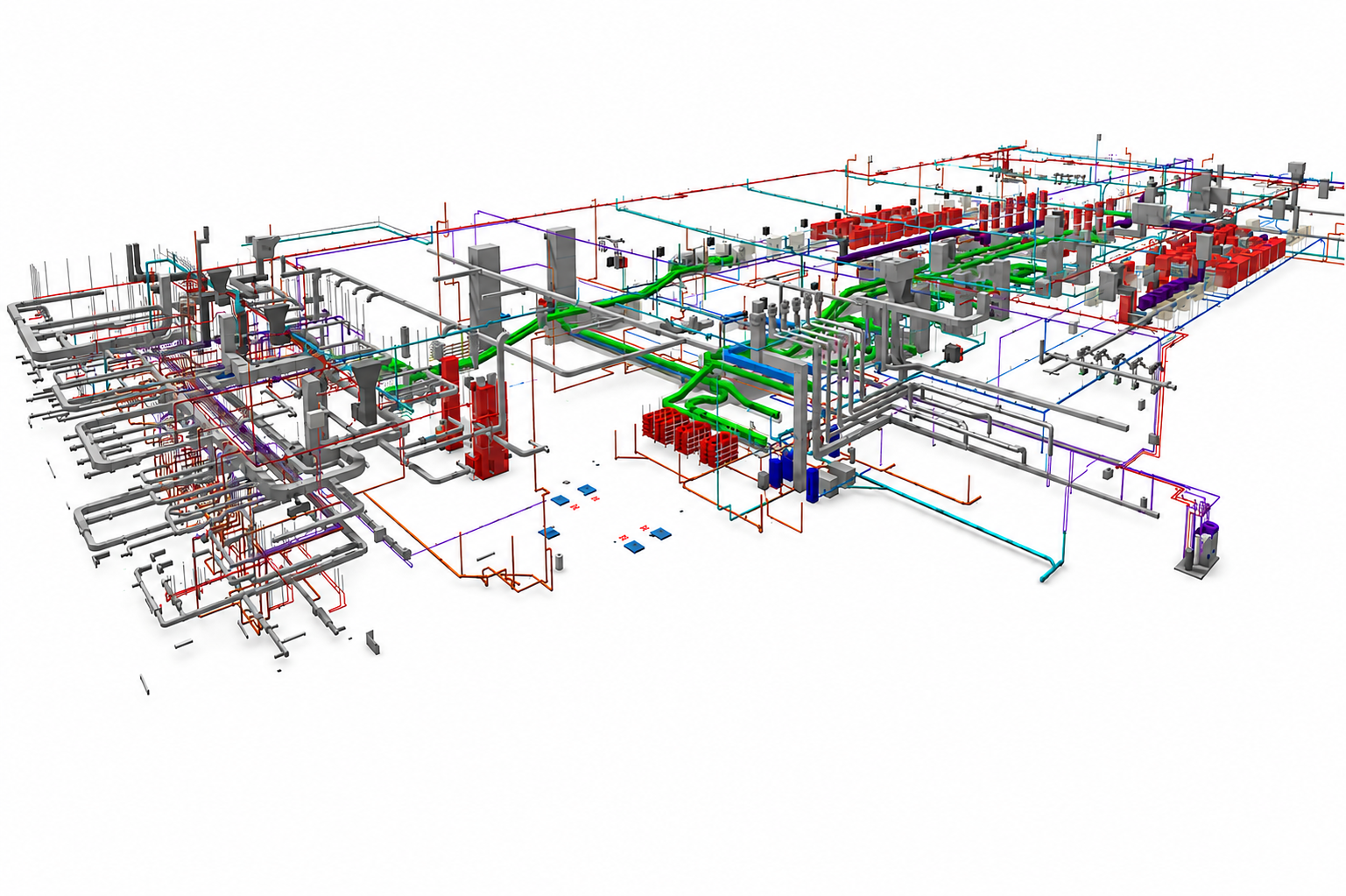
Using colour-coded systems within the model allows each service to be easily identified at a glance, improving clarity for both coordination and installation. Piping systems are visually distinguished before construction begins, helping all trades understand routing, priority, and spatial relationships.
This clarity carries through to prefabrication and site installation, reducing confusion in congested areas and minimizing the risk of misidentification or installation errors. Crews can quickly orient themselves, leading to more efficient workflows and smoother sequencing.
The result is a more organized and intuitive installation process, supporting faster decision-making and a seamless build from model to field.

Using Total stations for layout directly from the coordinated model allows hanger points and slab penetrations to be set out on deck with a high degree of accuracy before installation begins. Field crews work from verified model data, reducing the need for manual measurement, rework, and on-the-fly adjustments.
This approach ensures that critical supports and openings are placed correctly the first time, aligning structural, mechanical, and architectural elements as intended. The result is a more efficient install process, fewer conflicts in the field, and a smoother progression from layout to installation.A model-based approach allows as-built information to be captured in a clear, accurate, and interactive 3D format. Rather than relying solely on marked-up drawings, project teams can review installed systems visually, confirm routing and locations, and access a more complete record of the finished work.
This creates a practical handover tool that supports future maintenance, renovations, and building operations while preserving the coordination accuracy developed throughout construction.